What are the grain storage facilities and equipment?
What are the grain storage facilities and equipment?
With the development of smart agriculture, modern grain storage has shifted from traditional manual management to a “mechanized + intelligent” model. The facility and equipment system is built around five dimensions: storage, control, monitoring, operation, and protection, forming a comprehensive protection network covering the entire grain storage lifecycle.
I. Basic Storage Facilities
Storage facilities are the “containers” of grain storage, and their structure and materials directly affect storage safety. Currently, the mainstream reinforced concrete vertical silos and shallow circular silos have advantages such as large capacity, good sealing, and small footprint, making them suitable for large-scale commercial grain storage. The silo body needs to undergo anti-corrosion and moisture-proof treatment, and the inner wall should be smooth to avoid grain residue. For farmers or small grain depots, steel-structured flat warehouses are more flexible, allowing for the isolated storage of different grain varieties through zoned design. In addition, grain bins, as supplementary storage facilities, often use steel frame structures with rainproof tarpaulins, suitable for short-term emergency grain storage, and require regular checks on windproof stability.
II. Environmental Control Equipment
Temperature and humidity are key factors affecting grain quality and require precise control through professional equipment. The grain ventilation system is the core equipment, including centrifugal fans, ductwork, and airflow regulation devices. It ventilates, cools, and reduces moisture based on grain temperature data, preventing grain from heating up and becoming moldy. In high-temperature and high-humidity areas, low-temperature grain storage equipment is widely used, such as prefabricated low-temperature silos and grain coolers, which can control the temperature inside the silo below 15℃, extending the grain’s shelf life. For high-moisture grains, drying equipment is essential. Circulating grain dryers use hot air drying technology to reduce grain moisture to a safe standard (usually below 13%). The hot air temperature must be controlled during the drying process to prevent grain gelatinization.
III. Grain Condition Monitoring System
Smart grain storage relies on real-time monitoring data. The grain condition monitoring system consists of sensors, data acquisition devices, and a monitoring platform. Temperature sensors are arranged in a “three-dimensional grid” inside the grain pile to accurately collect grain temperature data at different depths and in different areas. Humidity sensors are installed on the top of the silo and on the surface of the grain pile to monitor the air humidity inside the silo and the surface moisture of the grain pile. Some systems are also equipped with pest detection sensors, which use infrared or image recognition technology to detect pest activity in the grain pile at an early stage. Data is wirelessly transmitted to a monitoring platform, allowing staff to remotely view real-time data. The system automatically issues warnings when indicators are abnormal, avoiding the lag of manual inspections.
IV. Inbound and Outbound Equipment
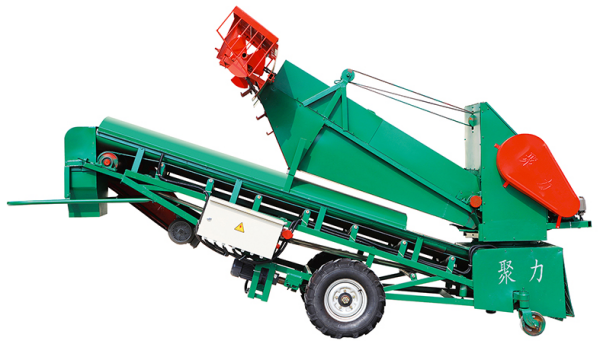
The degree of mechanization in grain inbound and outbound operations directly affects operational efficiency and grain loss. In the inbound process, cleaning screens remove impurities (such as straw and sand) from the grain, ensuring its purity. Elevators (mostly bucket elevators) work in conjunction with belt conveyors to vertically and horizontally transport grain from transport vehicles to the grain silo; attention must be paid to sealing and dust prevention during equipment operation. In the outbound process, unloading devices (such as bottom unloading gates and screw conveyors) control the grain outbound speed to prevent blockages caused by grain stacking. For bulk grain, bulk grain loaders achieve precise loading, reducing grain spillage and loss. Large grain depots are also equipped with automated loading systems, controlled by PLCs for unmanned operation.
V. Safety Protection Equipment
Grain storage requires consideration of both facility safety and personnel safety; protective equipment is indispensable. Firefighting equipment is fundamental, including automatic fire alarm systems, dry powder fire extinguishers, and fire hydrants. Grain silos are classified as Class C fire hazard locations, requiring regular inspections of the effectiveness of fire protection facilities. To address dust explosion prevention, dust concentration monitors and explosion-proof ventilation equipment must be installed in grain processing and conveying areas to prevent dust from reaching explosive limits. Work areas must also be equipped with static grounding devices to eliminate static electricity generated by equipment operation and prevent accidents caused by static sparks. Furthermore, protective facilities such as grain barriers and ladder railings can prevent silo deformation caused by lateral pressure from grain, ensuring the safety of workers operating at heights.
News
Contact Us
Contact: Venka Industrial Technology
Phone: +86 13663827325
Tel: +86 13663827325
E-mail:
Add: High Technology Area, Zhengzhou, Henan, China