Axial Fans: Aerodynamic Principles and Industrial Applications
Axial Fans: Aerodynamic Principles and Industrial Applications
The axial fan represents a cornerstone of industrial fluid dynamics, distinguished by its ability to move large volumes of air at relatively low pressures. Unlike centrifugal fans, which alter the airflow direction by 90 degrees, axial fans discharge air parallel to the shaft axis around which the blades rotate.
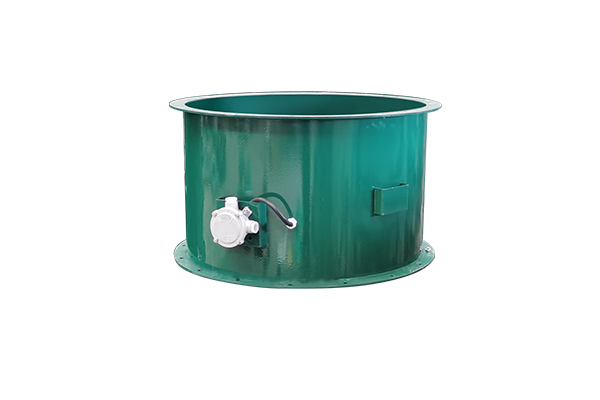
Key performance characteristics are governed by the blade pitch, rotational speed (RPM), and the number of blades.
Blade Pitch: Adjustable pitch mechanisms allow operators to optimize the angle of attack for specific system requirements, balancing flow rate against power consumption. Fixed-pitch fans are simpler but less adaptable to varying system resistances.
Flow Dynamics: Axial fans operate efficiently within a specific range on their performance curve. However, they are susceptible to “stall” conditions if the system static pressure exceeds the fan’s capability. In a stall condition, airflow separates from the blade surface, causing turbulent vibration, noise, and a drastic drop in performance.
Tip Clearance: The gap between the blade tip and the fan housing is critical. Excessive clearance allows air to recirculate from the high-pressure discharge to the low-pressure inlet, significantly reducing efficiency. Precision manufacturing ensures minimal tip clearance to maximize volumetric efficiency.
Classification and Design Variants
Axial fans are categorized based on their construction and intended duty cycle:
Propeller Fans: The simplest form, often lacking a surrounding cylinder. They are ideal for free-air delivery applications like wall exhausts or condenser cooling but perform poorly against any static pressure.
Tube-Axial Fans: These feature a cylindrical housing surrounding the propeller. The housing guides airflow and reduces tip losses, allowing the fan to overcome moderate static pressure. They are common in ducted ventilation systems.
Vane-Axial Fans: The most sophisticated variant, incorporating straightening vanes (stators) either upstream or downstream of the impeller. These vanes convert the rotational swirl (tangential velocity) imparted by the blades into additional static pressure and linear flow. Vane-axial fans offer the highest efficiency and pressure capabilities among axial designs, making them suitable for complex industrial processes and wind tunnel testing.
Industrial Applications and Selection Criteria
The selection of an axial fan is dictated by the system curve—the relationship between flow rate and static pressure. Axial fans excel in low-resistance environments. Primary applications include:
Thermal Management: Cooling electronics, data centers, and power generation turbines where moving massive air quantities is paramount.
Thermal Management: Cooling electronics, data centers, and power generation turbines where moving massive air quantities is paramount.
Process Ventilation: Removing fumes, heat, or contaminants in manufacturing facilities, mines, and tunnels.
HVAC: Circulating air in large commercial buildings and agricultural structures.
News
Contact Us
Contact: Venka Industrial Technology
Phone: +86 13663827325
Tel: +86 13663827325
E-mail:
Add: High Technology Area, Zhengzhou, Henan, China